Matching Biomechanical Data to Seasonal Changes in Court and Track Sports Performance
Rafael Albrecht · Aug 12, 2026
Matching Biomechanical Data to Seasonal Changes in Court and Track Sports Performance
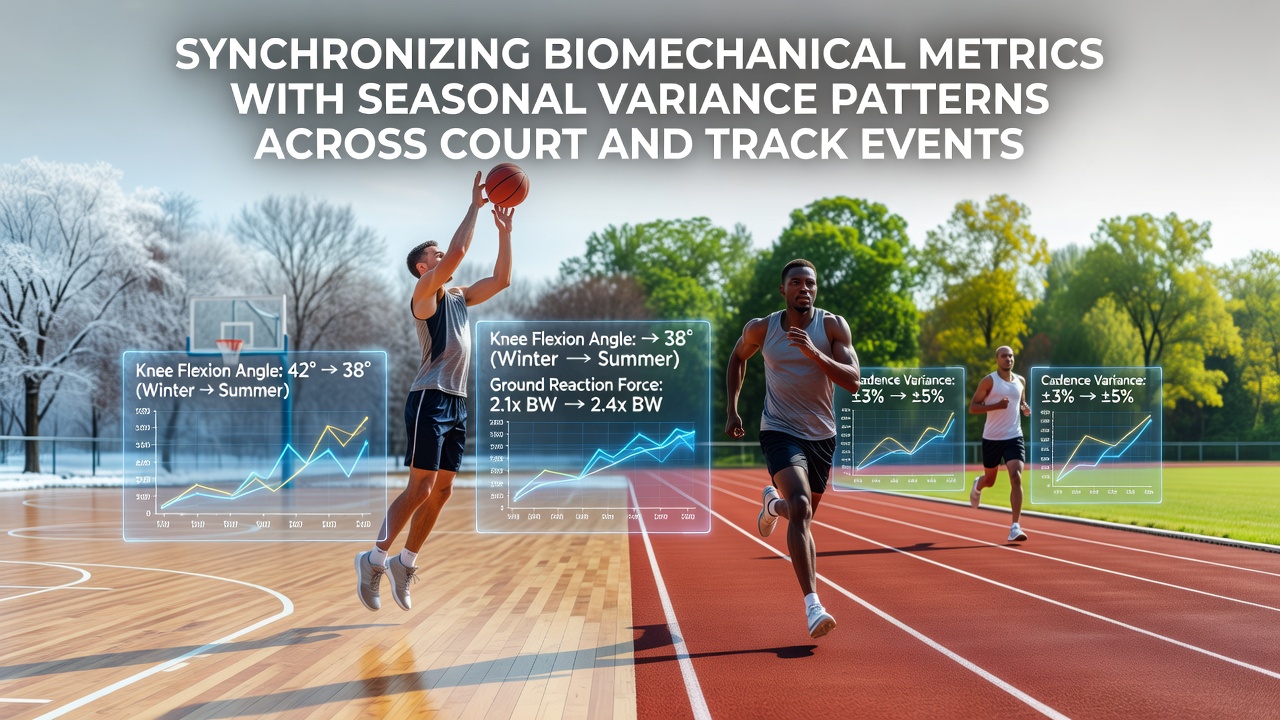
Researchers collect stride length, joint torque, ground reaction forces, and muscle activation patterns through motion capture systems, force plates, and wearable sensors. These measurements get aligned with temperature shifts, humidity levels, daylight duration, and precipitation trends that alter surface friction and athlete physiology across different months. Court events such as tennis and basketball occur on clay, grass, hardwood, or synthetic surfaces, while track competitions involve standardized 400-meter ovals and field event areas. Seasonal patterns influence both categories in measurable ways. Data from multiple training centers show that warmer conditions in late spring increase muscle elasticity yet raise core temperature faster during repeated sprints. In contrast, cooler autumn sessions reduce joint range of motion and slow reaction times on indoor courts. Synchronization tools combine these variables into unified datasets that coaches review before scheduling high-intensity drills.Data Collection Methods Across Seasons
Portable inertial measurement units capture three-dimensional movement at 200 hertz or higher while athletes complete sport-specific tasks. Heart rate monitors and GPS units add cardiovascular and positional layers. Environmental stations placed near training venues record air temperature, relative humidity, wind speed, and barometric pressure at five-minute intervals. Software platforms then timestamp every biomechanical sample against the nearest weather observation, creating paired records that reveal correlations between external conditions and internal mechanics.
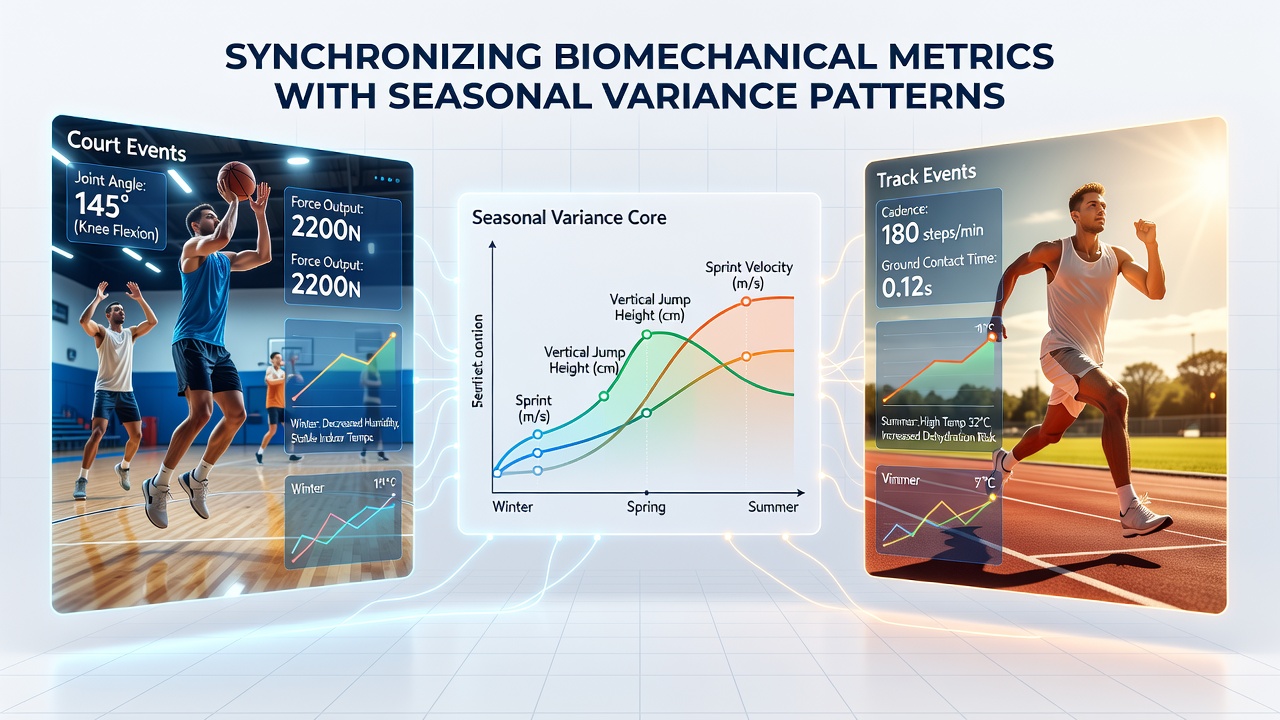
Studies conducted at facilities in North America and Europe demonstrate that basketball players exhibit 4 to 7 percent greater vertical ground reaction forces during jump shots when ambient temperatures exceed 28 degrees Celsius compared with sessions below 18 degrees. Tennis players on outdoor courts show reduced knee flexion angles during serves as humidity rises above 70 percent, a change linked to altered grip friction and sweat accumulation. Track sprinters record shorter flight times between steps when training in early morning cool air versus midday heat.
Seasonal Variance Patterns in Court Sports
Indoor basketball venues maintain relatively stable temperatures year-round, yet external seasonal factors still appear through changes in player acclimatization and travel schedules. Athletes arriving from regions experiencing winter conditions often display elevated baseline heart rates during the first week of summer league play. Surface hardness in outdoor tennis courts increases during dry periods, raising impact forces transmitted through the lower extremities. Maintenance crews adjust clay moisture content daily, and these adjustments produce measurable shifts in slide distance and recovery steps that biomechanical systems quantify.
Track and Field Adjustments
Track athletes experience pronounced effects from seasonal daylight changes that alter warm-up duration and recovery windows. August 2026 training logs from multiple national programs recorded higher hamstring strain incidents during evening sessions when temperatures dropped rapidly after sunset. Researchers synchronized these incidents with reduced gluteal activation measured in pre-session tests. Field event athletes, particularly long jumpers and pole vaulters, adapt their approach run mechanics as wind patterns shift from prevailing summer breezes to autumn gusts. Force plate data collected at takeoff boards show corresponding changes in horizontal velocity and vertical impulse.
Integration Platforms and Analytical Techniques
Specialized software merges biomechanical time-series data with meteorological archives using synchronized clocks accurate to one second. Machine learning models trained on multi-year datasets identify thresholds where performance metrics deviate beyond normal variation. One model flags when knee valgus angles during basketball layups exceed established baselines under specific humidity ranges. Another predicts optimal start times for 400-meter training repeats based on forecasted temperature and prior session outputs. National federations in several countries now require such integrated reporting as part of athlete monitoring protocols.
According to findings presented by the American College of Sports Medicine, longitudinal tracking across three seasons revealed consistent patterns in how seasonal variance influences elite-level court and track performances. Separate analyses from the Australian Institute of Sport have corroborated similar temperature-related shifts in stride frequency among sprinters preparing for domestic summer meets.
Practical Applications in Training Schedules
Coaches adjust periodization plans once synchronization outputs highlight recurring seasonal dips. A tennis program might reduce high-volume serving drills during peak afternoon heat in July and shift emphasis to tactical work. Track squads often schedule technical sessions for discus and javelin earlier in the day during spring months when wind variability remains lower. These schedule modifications rely on objective thresholds rather than anecdotal observation.
Conclusion
Biomechanical metrics aligned with seasonal variance data provide objective benchmarks that support consistent preparation across court and track disciplines. Continued refinement of sensor accuracy and environmental logging improves the precision of these alignments. Programs that maintain comprehensive paired datasets position athletes to manage physiological responses to changing conditions throughout teh calendar year.